Tuesday, 11 November 2014

Other ways to stain wood:

I've been looking into more tannins, and although ebonizing the wood with the steel wool and vinegar seems the most interesting to me, here are a few others i plan on trying our too:

Dark tea: Use about 10+ tea bags, and let soak in boiled water for 2-3 hours. Use the tea-stained water as a dye.

Liquid bleach: Using a rag, apply liquid bleach to the wood surface.

Fruit juice: Juices such as raspberry or grape, but colour may go brown.

Food colourings: Bright coloured food dyes.

Shoe polish: To create a very dark ebonized look

Red wine: To create a deep brown/maroon colour.


EBONIZING WOOD

How to?:

1) Place (real) steel wool in a plastic jar
2) Pour vinegar into the jar
3) Soak the steel wool (over a week for best results)
4) Strain the liquid, and use liquid to brush onto the wood.

The darker the wood used, the darker the finish. For example, a very dark wood could look almost black.

COLOUR LIST: 
What makes pigments?

Black: Charcoal, bone black 

White: Chalk, bone

Red: Berries, "dragons blood", Madder plant, Cinnabar,
 - Dragons blood is a red resin that comes from some palm plants. 

Blue: Indigo leaves, duck poo

Yellow: Yellow clay, berries, gold leaf

Green: Plants


Recently i've been looking more into the scientific side of dyes and tannins, as well as inorganic and organic pigments. Inorganic pigments are the crystals of metal oxides.
Here is what i've found out:

INORGANIC PIGMENTS:

Chromium oxide green:
Usually known as chrome green, this pigment can be found in lead chromite. In the past, it was used as enamel in porcelain, which then was used as a painting pigment.

http://www.naturalpigments.com/chromium-oxide-green-pigment.html
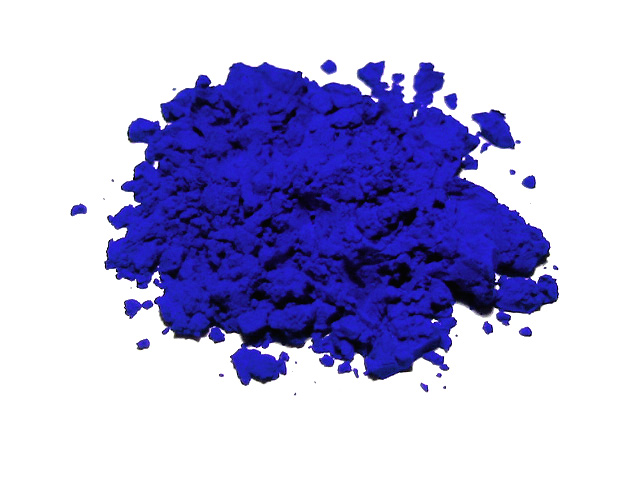
 Ultramarine blue:
Originally comes from the stone lapis lazuli, and originates from Afghanistan.


https://www.google.co.uk/search?q=Mixed+metal+oxide++pigment&newwindow=1&client=firefox-a&hs=m0J&rls=org.mozilla:en-US:official&channel=fflb&source=univ&tbm=shop&tbo=u&sa=X&ei=8XJiVPTHEbiAsQTH0IKADg&ved=0CCIQsxg&biw=1280&bih=564

Link above for ways to buy these pigments. A lot of them are on Etsy! These pigments do come in all sorts of colours, including pinks, purples, oranges, and yellow.


Thursday, 30 October 2014

Tips for dying fabric naturally & organically! This lady shows so many colors you can get from different things, and gives directions on how to make the fabrics look their best!
I've already tried 2 of these, but i'm wondering if the rest would work similar too with resin? 

Bug dye!

I've come across a interesting way farmers use bugs in central America.
I had heard of this before, as I had a friend who swore she wouldn't ever drink anything strawberry flavoured as it has this 'bug dye' in it.
Well, turns out it is true. In many red-coloured foods (for example, a strawberry frappuchino from Starbucks), cochinal insects are what make it so pink.
The insects are found on cactus leaves, which are then picked and crushed, and their smashed bodies create a a dark red ink. Sounds a little bit gross, but it is in a lot more than people often suspect.
Red lipstick, juices, and candy sometimes contain this red dye. The dye is usually called "carmine" when labeled on a packet. Which, to be honest, sounds a lot better than crushed bug body!

http://www.businessinsider.com/how-farmers-make-red-dye-from-bugs-2014-10?op=1

Cochineal insects, native to Central and South America, thrive on one particular species of cactus — the prickly pear.

They then store the leaves inside a greenhouse, where the bugs can continue to thrive.
The cactus leaves are put into a greenhouse which allows the bugs to then continue to grow and live on the leaves.

The tiny bugs get their color by thriving on the plant's bright red cactus berries, which are scattered across the leaves.
Since the bugs don’t budge, workers have to use tough brushes to scrape them off of the cacti leaves. Just a few bugs won’t do it: Nearly 70,000 insects are just enough to make one pound of dye.

The bugs are scraped off the leaves
By the colonial period, cochineal dye had become one of Mexico’s most prized exports, second only to silver. Here, a worker selects the best insects from the harvest, which, once dried, he will crush into a grainy, red substance.
The bugs then die, and are left to dry out.
A worker uses his fingers to crush a cochineal insect, revealing its deep red color.
When crushed, they produce a red dye (pictured above).

So once the process is complete, the bugs can be made into powdered dyes which can be in a range of shades, from a very light and bright red to a deep maroon.


That substance is then processed into a powder or mixed with water and made into a liquid. The pigment can take on several different shades, making it widely appealing for a variety of uses. The ancient industry has seen a recent economic revival in South and Central America. Today, Peru exports the most of the dye; the country produces close to 200 tons of it each year.

Propositions

Tonight we are having a "propositions" show, to show our work and where we are at the moment.
I am showing my experiments so far:


First experiments


My experiments have been drying, and here are the outcomes!


<-- This was my first test with the hibiscus tea. It didn't go to plan at all. It may have been a bit of a blonde moment, but that's what experimenting is all about! I expected since when the tea is mixed with boiling water (or any water, really) it turns a bright red colour. With resin, it seemed to have not done so at all. The resin seemed to have just encased the bits of tea. The texture was very interesting. Soft, but still a bit bumpy. Interesting to say the least!


<-- This was the tumeric test. I quite liked this one, as once it dried, the edges were a very bright yellow, almost neon colour. In the light it made them look even better as the edges glowed. 


<-- Paprika. Did not turn out nearly as red as i was hoping..


<-- Chocolate. Turned out as expected! A really smooth texture as well, not bumpy like it looks.


<-- Coffee. Probably my favourite out of the bunch so far. Has a really cool rough texture, almost like a rock or gravel. And the smell is amazing! Smells very strongly of coffee, which cancels out the strong smell of resin.


<-- Cinnamon. Smells a lot like cinnamon (not much of a resin smell), which is pretty cool. Smooth texture, brown/orange colour.


-------------------------------------------------------------------------------------------------------------------

 
So i decided to try fill gaps in wood with resin to see what it would turn out like. One out of the 3 i have tried turn out exactly as I had hoped, while the other two (which didnt turn out too bad!), the resin had sunk in more than i had thought, which ended up making it not as smooth at the top. 

Coffee 

Cinnamon 


 Paprika

The paprika was definitely my favourite. It worked out just as planned!

Wednesday, 29 October 2014

Natural dyes?

Over the past few weeks, i felt a little bit stuck with where to go with my work.
I decided to start experimenting and trying things out with wood and resin.
Personally, I've always loved colour. In the past, all of my works are focused on colour and it is very rare that i don't use colour in my work. So, naturally, i started thinking "how could i make the resin and wood more colourful?". Yes, i could use resin dyes (but that would be too simple!).

So while i've been experimenting, I've decided to go down the root of using natural dyes and stains.
I remembered back to last year when i created my sand and seaweed bowls. The seaweed made the resin quite a dark green / turquoise colour. At the time, it did not really cross my mind. But now I think, why should i use toxic dyes and powders when i can create my own out of natural things, like the seaweed? Of course there is also the factor that making your own dyes and stains from food and plants is a lot of fun and makes me feel like a little kid again!

I began by looking through my cupboards at home. I pulled out anything that was dry, or could be dried, and made into a powder (or close to powder).
I then went to uni, and did some experiments on some spare chunks of wood.
I tried to use wood that had its natural surface so I could see how the resin reacted and soaked in.

I decided to use the below ingredients for the experiments.


 Coffee

 Cinnamon

Tumeric

Paprika

Hibiscus tea 

Baked spinach 
- used fresh spinach
- baked on a low heat for 3-4 hours 

 Green tea matcha powder

Chocolate

So i initially started to mix the natural 'dye' with resin, and paint it directly onto the wood. 
I use lay up resin, not casting resin. 

Results to come!


Inspiration and getting started!

So, over the summer I decided to think of some ideas that I wanted to produce in my final year at university. The past 2 years I have focused mainly in using plastics and polymers; especially last year when both of my projects used resin. I had made a series of bowls using sand and seaweed, as well as making bracelets which lit up when activated by a phone app in regards to a project called Designing for the Future. 

I started looking online, and found a bunch of inspiring designers who use a lot of resin in their work. I got the idea to start looking at the mixture of resin and wood because they are such opposite materials, that when combined it looks so unlike much of the wooden furniture most of us are used to. I feel that the mixture of plastics and natural materials, like wood, looks very modern and allows extra colour and provides a very different approach to furniture making.

Some of the designers and artists i came by are here below:

"Encased nesting tables" (resin and wood) - anthropology.com 

Resin inlaid shelves - mmmat
  http://imgur.com/a/pFaF2#Lok3fik

Mesquite table with turquoise inlay 

Teak and wood resin cubes - www.indonesiateakfurniture.com 


Alcarol Bricola collection 

And of course, lastly, the Abyss Table by Duffy London (www.duffylondon.com). 
This is by far the most amazing piece of furniture I've ever seen.